Definition
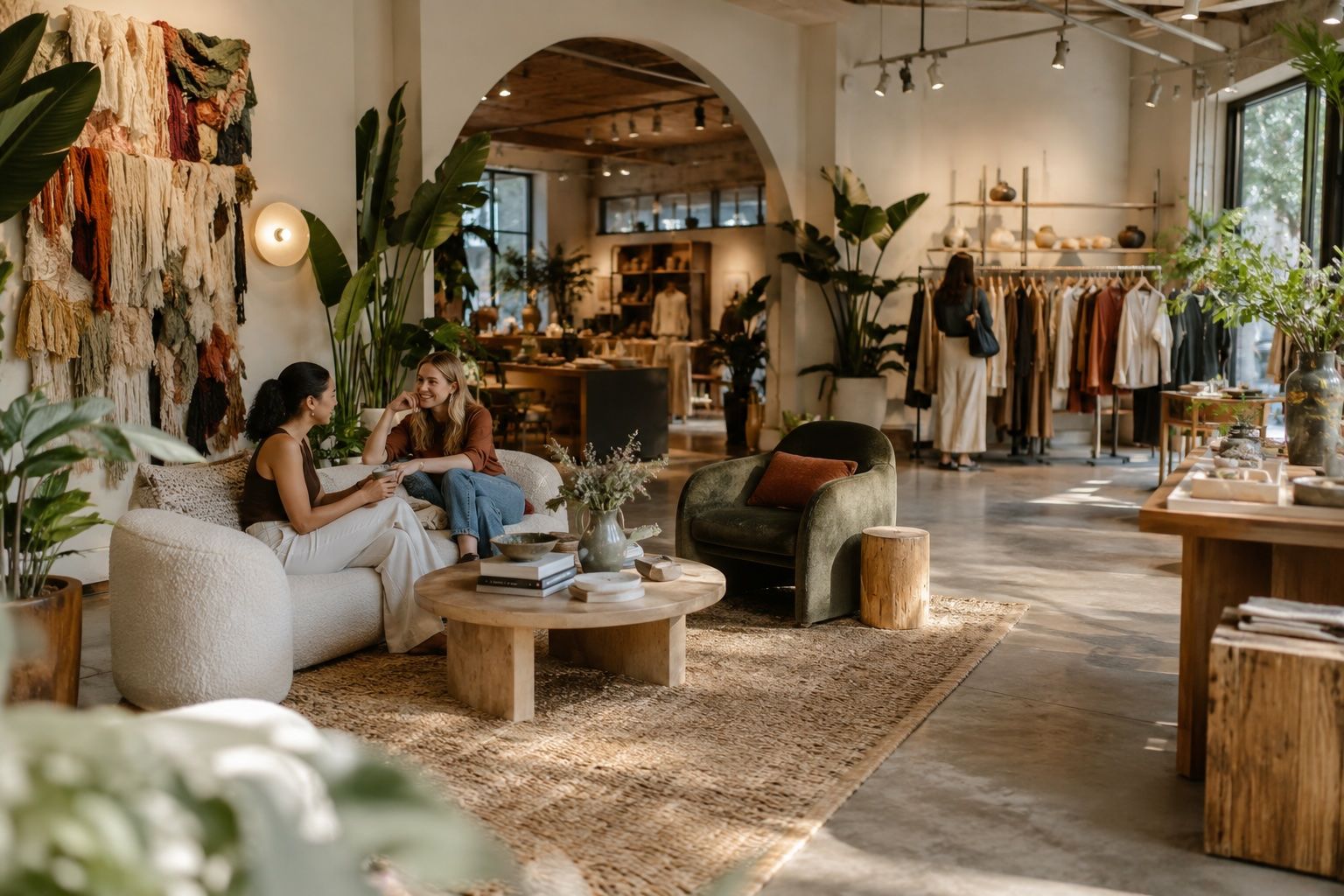
Retailtainment means adding entertainment, social interaction, or experience to a retail environment, so a store visit becomes something worth doing rather than an errand. It sits alongside showrooming and webrooming (see Brick-and-Mortar vs Digital Commerce) on the list of strategies brick-and-mortar retailers use against the sheer convenience of shopping from a couch.
Why experiences beat products
Cornell psychologist Thomas Gilovich studied why experiential purchases hold up better over time than material ones, and the answer is almost mundane: experiences don't invite the same side-by-side comparison that slowly ruins your satisfaction with a thing you bought. Eventbrite found the same pattern in its research on millennial spending: 78% of the millennials it surveyed would rather spend on a desirable experience than a desirable object, and 55% said they were spending more on live experiences than they used to.
Harvard Business Review put a number on why that matters to a business, not just a psychologist. Its 2015 research on customer emotion found that brands connecting with what the authors call "emotional motivators" — a sense of freedom, of belonging, of thrill — see measurably higher customer lifetime value than brands competing on price or selection. Worth noting: those motivators aren't universal. A car dealership and a boutique clothing store are not selling the same feeling, and treating them as if they were is how a retailtainment plan falls flat.
Three ways to apply it in-store
A lounge area with real seating, decent wifi, and something to drink turns "get in, get out" into "stay a while," and the longer someone's in the store, the more chances there are to sell them something. A photogenic corner, an art installation, a small in-store event: all of these give a customer a reason to pull out their phone and post about your store rather than just walk through it. And letting someone explore a product alongside a real person — in the aisle, or increasingly over live video — turns a silent shelf browse into a conversation, which is usually where the actual emotional motivator gets triggered.
None of this replaces price or selection. It's additive: retailtainment gives someone a reason to pick your store over a functionally identical competitor. Oktium's business page covers how live video carries that same "someone's right here to help me" feeling to a shopper who never physically walks in.
Sources
- Harvard Business Review, "The New Science of Customer Emotions" (2015)
- Eventbrite, research on millennial spending on experiences vs. material goods
- Thomas Gilovich, Cornell University, research on experiential vs. material purchases and long-term satisfaction